A real case: glass hiding under a callus
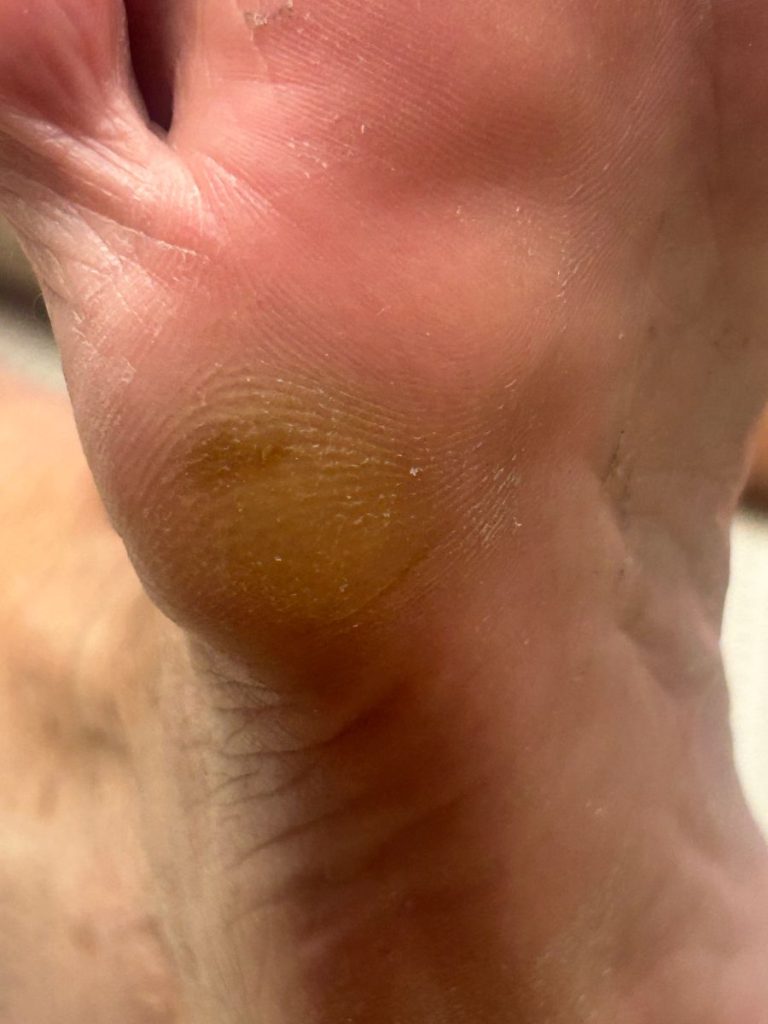
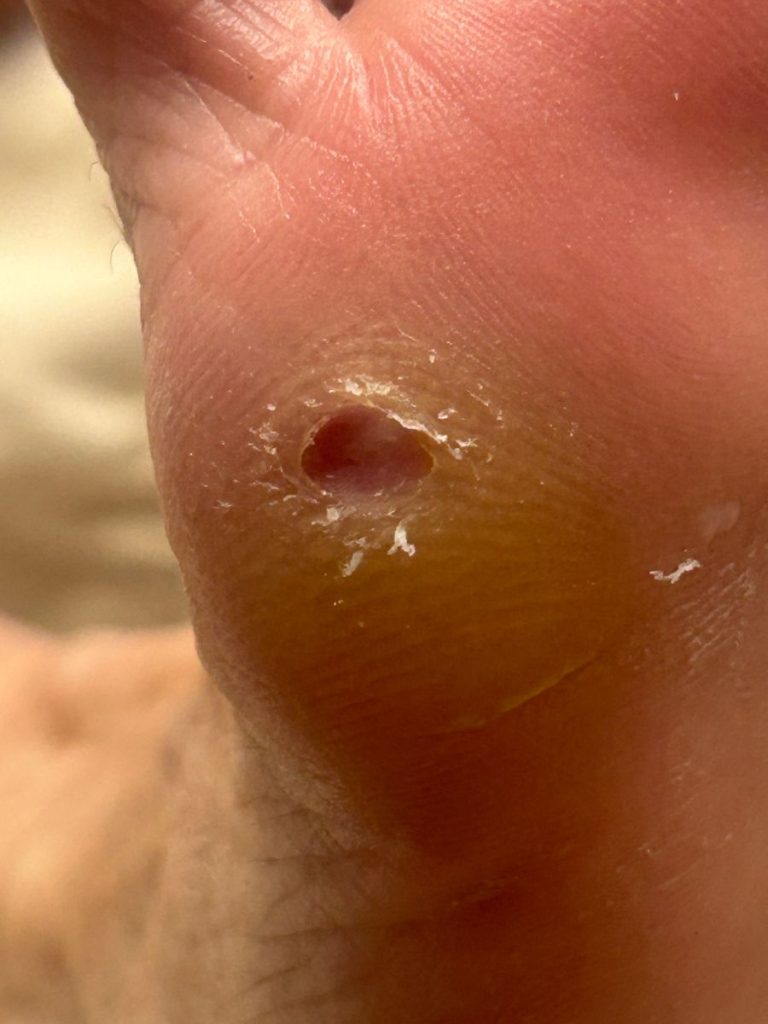
This patient stepped on a piece of glass and didn’t really feel it at the time. As time went on, a thick callus built up on the bottom of the foot, just behind the big toe, and walking became very painful. The patient had no idea there was glass inside it.
Dr. Barnett removed the callus, found the glass underneath, and took it out. For this patient, the relief was immediate.
What’s the difference between a foreign body and a callus?
A callus is the skin’s response to pressure. A foreign body is something stuck in the foot that doesn’t belong there, like glass, a splinter, or a metal shaving. One can cause the other: a foreign body pressing from the inside is one of the things that can make a callus form.
In Dr. Barnett’s words, a callus is keratin build-up. Keratin is the tough protein that makes up the outer layer of your skin, along with your hair and nails. When the same spot gets pressed on over and over, the skin lays down more keratin to protect itself, and that thick, yellowish patch is the result.
A foreign body can sit in the top layer of skin (the epidermis), the layer just below it (the dermis), or deeper. The body can react to it in a few ways. The area can get infected or form an abscess, which is a pocket of pus. Or, as in this case, the skin can sense the hard point pushing up from inside and start building keratin over it quickly.
How can glass end up under a callus without you knowing?
Your skin reacts to pressure the same way whether it comes from a tight shoe, a bone sitting low, or a sliver of glass pushing up from inside. It thickens. A tiny puncture on the sole can also close up fast, so there’s nothing to see, and by the time the callus really hurts, nobody is connecting it to a glass that broke at home weeks earlier.
The callus then makes things worse. Each new layer adds to the pressure on that one point, so it tends to hurt more over time.
What else causes a painful callus on the bottom of the foot?
Glass isn’t the only cause. Dr. Barnett looks at a few others, and each one needs a different fix.
Plantar warts
A wart on the sole gets stepped on all day, so callus builds over it and hides it. A wart usually has tiny black dots, breaks up the normal skin lines, and hurts more when you pinch it from the sides than when you press straight down. Trimming alone usually doesn’t clear it. Treatments like Swift therapy for plantar warts work by getting the immune system to go after the wart. As Dr. Barnett puts it, “the body is removing the wart.”
A thin fat pad
The natural cushion under the front of the foot can thin out, which leaves less padding between the bone and the skin. The skin answers with callus right where the bone presses.
Foot shape and the way you walk
A bunion, a hammertoe, a metatarsal that sits low, or a stride that loads one spot too hard can all build callus. Dr. Barnett’s goal with calluses is to keep them from forming in the first place, and that’s where a gait analysis and custom orthotics come in. Orthotics take the pressure off the spot that keeps building up.
Signs a callus might be hiding something
- A sharp, pinpoint pain when you step, like walking on a pebble
- Tenderness in one small spot instead of across the whole patch
- A callus in a new spot, where you’ve never had one before
- It comes right back after you file it, or filing doesn’t ease the pain
- You remember stepping on something, or glass broke at home recently
- Redness, warmth, swelling, or drainage around it
If you have diabetes, neuropathy, or poor circulation, get any of these looked at sooner rather than later. Reduced feeling can let a small problem turn into a wound before you notice it. Our diabetic foot care page explains why early care matters.
Why trimming the callus only helps for a while
Shaving down a painful callus can feel better right away. But the skin built that keratin for a reason, and if the reason is still there, the callus grows back and the pain comes with it.
Dr. Barnett’s approach is to find what’s making the skin thicken and treat that. Here, it meant taking the glass out. For someone else, it might mean treating a wart or fitting an orthotic that takes pressure off a bone. Fixing the cause is what usually keeps the callus from coming back.
How a podiatrist finds a foreign body in the foot
It starts with questions: where it hurts, for how long, and whether you remember stepping on anything. Then the callus is pared down a layer at a time, which often shows what’s underneath, the way it did in the photos above.
If something is suspected but not visible, imaging can help. Glass often shows up on an X-ray. Wood, plastic, and thorns often don’t, so other imaging, such as an ultrasound, may be needed. Once the object is found, the area may be numbed, the object removed, and the spot cleaned and dressed.
Should you dig glass out of your foot yourself?
Not if it’s under a callus or you can’t see it. A splinter sitting right at the surface can be pulled with clean tweezers. Glass is trickier, since it can break as you grab it, and cutting into the sole at home can push it deeper, damage healthy skin, and invite infection. If you have diabetes or reduced feeling in your feet, skip home removal entirely.
Getting a painful callus looked at in St. Petersburg
At Align Foot & Ankle, you see Dr. Barnett himself, one-on-one, from your first visit. He looks past the callus for the reason it’s there, explains what he finds in plain language, and lays out a good, better and best plan so you can choose the path that fits your goals.
Same-day and next-day appointments are often available, and we also offer walk-in visits. Our office is in St. Petersburg, near HCA Florida Pasadena Hospital.
Frequently asked questions
Can glass stay in your foot for months?
Yes. Small pieces can stay lodged for weeks or months, especially when the skin closes over them. Some work their way out on their own. Others keep causing pain, callus, or infection until they’re removed.
How do I know if there’s still glass in my foot?
The usual signs are a sharp, pinpoint pain when you step down, tenderness in one small spot, and a callus or bump that builds over it. Redness, swelling, or drainage can mean the area is irritated or infected. A podiatrist can check by paring the area down and, if needed, ordering an X-ray.
Can a callus grow over a splinter or a piece of glass?
Yes. The skin senses the hard point pressing from inside and builds keratin over it, the same way it would over a bone that sits low. That’s what happened in the case above.
Will a foreign body come out on its own?
Sometimes. The body can push a small piece to the surface over time. But if the spot hurts when you walk, keeps building callus, or looks red or swollen, it’s better to have it checked than to wait it out.
How can I tell a callus from a plantar wart?
Press and pinch. A callus usually hurts most when you press straight down, and the skin lines run through it. A plantar wart often hurts more when pinched from the sides, interrupts the skin lines, and may show tiny black dots. A podiatrist can usually tell them apart.
Get back on your feet
If a callus is making every step hurt, or you think something might be stuck in your foot, call us at (727) 954-8075 or schedule online. We’ll take a look and talk through your options.
This article is general information, not medical advice. Every foot is different, and results vary from patient to patient. The photos show one patient’s case.